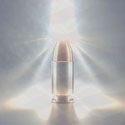
ForseMark Ammunition
It's not for everyone.
Built to Serve Those Who
Serve
Paperwork Burden
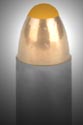
ForseMark 9mm 95 Grain Explosive Tip Impact Round™ (StrikeForce™ ETIR) - (StrikeForce™ ETIR)(ETIR))
Next-Gen Penetration. Hybrid Reliability. Mission-First Design.
Although it varies state to state and even city to city, here is a breakdown on the paperwork that is requried after Flash Bang and Explosive Tip Impact Round™ use.
When police deploy a flashbang—officially known as a Noise Flash Diversionary Device (NFDD)—they're typically required to complete detailed documentation to ensure accountability, safety, and compliance with departmental and federal regulations. Here's what that paperwork often includes:
FLASH BANG
Required Documentation After Flashbang Use
1. Use-of-Force Report
- Justifies the deployment of the device
- Describes the tactical situation (e.g. barricaded suspect, high-risk warrant)
- Includes names of officers involved and supervisor authorization2. Incident Report
- Narrative of the entire operation
- Time, location, and context of deployment
- Outcome of the operation (e.g. arrests made, injuries, property damage)3. Flashbang Deployment Log
- Serial number of the device used
- Officer who deployed it
- Exact time and location of deployment
- Whether the device functioned properly4. Supervisor Authorization Record
- Required unless in extreme emergencies
- Confirms that the Incident Commander or on-scene supervisor approved the use5. Safety and Risk Assessment
- Notes on environmental factors (e.g. presence of children, flammable materials)
- Any injuries or unintended consequences
- Whether fire-retardant gloves and eye protection were worn6. Training Verification
- Confirms that the deploying officer was certified and had completed department-approved training
- May include refresher training logs for SWAT teams
Since the ForseMark Exploding Tip round is classified as special purpose ammunition rather than an explosive device, the post-use documentation shifts away from ATF explosive tracking and toward agency-level use-of-force and specialty munition protocols. Here's a breakdown of what law enforcement officers typically need to complete after deploying such a round:
StrikeForce™ ETIR
Post-Deployment Paperwork for Special Purpose Ammunition
1. Use-of-Force Report
- Required if the round was deployed in a tactical or enforcement context
- Must detail the justification for use, target area, and intended effect
- Includes officer name, badge number, and supervisor review2. Incident Report
- Narrative of the full engagement or operation
- Specifies the type of round used (e.g., Exploding Tip, Olfactx, etc.)
- Notes on effectiveness, outcome, and any injuries or property damage3. Specialty Ammunition Deployment Log
- Serial or batch number of the round (if applicable)
- Date, time, and location of use
- Officer who deployed it and any witnesses
- Confirmation that the round functioned as intended4. Supervisor Authorization Record
- Required for pre-planned deployments (e.g., warrant service, crowd control)
- May be waived in exigent circumstances but must be documented post hoc5. Training & Certification Verification
- Confirms that the deploying officer was trained and certified for that munition
- May include refresher logs or scenario-based training records6. Post-Incident Review or Debrief
- Conducted by command staff or internal affairs
- Evaluates tactical decision-making, adherence to policy, and community impact
- May trigger additional reporting if the round caused unintended harmOptional but Recommended
7. Ballistic Performance Summary
- Useful for internal tracking and product refinement
- Notes on penetration, dispersion, or sensory effects
- Helps agencies build trust through transparency and data-driven reviews8. Community Impact Statement (if public-facing)
- Especially relevant for rounds with sensory or psychological effects
- Can be used in press briefings or community oversight reports
Why ForseMark
We don’t just manufacture ammunition—we build trust. Every round reflects our commitment to officer safety, operational relevance, and mission-first innovation. From rigorous testing to transparent documentation, ForseMark is proud to support those who serve with integrity and precision.
|
Mission-Driven Ammunition
(Why we do for you what we do.) |
Solutions
Built for the Field
(Our Products designed to fit your needs.) |
Mission-Based
Quote Request
(Price should not be a barrier to your safety) |
Meet
the Team Behind the Mission
(Who We Serve. Why We Build. What we believe.) |
Field-Proven
Data & Ready-to-Use Resources |
|
| © 2025 ForseMark LLC. All rights reserved. All content on this website — including documents, training materials, product descriptions, and branding — is the property of ForseMark LLC and protected by copyright and intellectual property laws. Materials are provided exclusively for law enforcement and military agencies purchasing ForseMark products. Any reproduction, distribution, or use beyond their intended purpose requires prior written permission. Agencies are responsible for clearing content with their internal legal and communications teams before any public use. This site does not provide legal advice. For permissions or inquiries, Contact Us | |||||